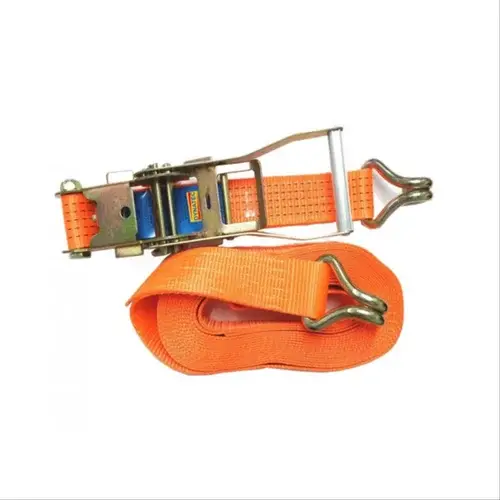
Key Features of Lashing Belts
Design and Construction
Lashing belts feature high-tensile polyester webbing combined with robust ratchet tensioners and forged steel hooks. Manufacturers design these belts to withstand heavy loads, vibration, and harsh marine environments while maintaining flexibility, durability, and strong cargo securing performance during transport.
Types
Lashing belts are available in ratchet tie-down belts, endless webbing slings, cam buckle straps, heavy-duty cargo straps, container lashing belts, and customized load restraint systems. Different hook configurations and load capacities support various marine cargo securing applications.
Applications
Marine lashing belts are widely used for securing cargo containers, machinery, vehicles, pipes, pallets, and heavy equipment onboard ships, offshore platforms, cargo vessels, trailers, and logistics operations. They help prevent cargo shifting during transportation and rough sea conditions.
Performance and Benefits
These belts provide strong load restraint, excellent tension retention, and resistance to abrasion, moisture, and UV exposure. Lightweight construction allows easy handling, while high breaking strength ensures safe cargo securing during marine transport and offshore logistics operations.
Maintenance and Care
Regular inspection of webbing, stitching, hooks, and ratchet mechanisms helps maintain operational safety and load capacity. Cleaning belts after exposure to saltwater, chemicals, or dirt extends service life and prevents material degradation in marine environments.
Safety Considerations
Lashing belts must always match the required working load limit (WLL) and cargo securing requirements. Operators should avoid over-tightening, twisted webbing, sharp edge contact, and damaged ratchet components to maintain safe cargo restraint during vessel movement and offshore operations.
Advantages of Lashing Belts
- Strong and reliable marine cargo securing solution
- Lightweight and easy-to-handle load restraint system
- High-tensile polyester webbing for heavy-duty applications
- Corrosion-resistant ratchet and hook components
- Suitable for marine shipping and offshore logistics operations
- Quick tensioning and release mechanism for efficient cargo handling
- Excellent resistance to moisture, abrasion, and UV exposure
- Available in multiple load capacities and belt lengths
- Improves cargo safety during rough sea transportation
- Low maintenance and long operational lifespan
Considerations for Lashing Belts
- Select proper working load limit based on cargo weight
- Ensure compatibility with cargo securing points and hooks
- Inspect belts regularly for cuts, wear, or damaged stitching
- Avoid contact with sharp edges without protective sleeves
- Store belts in dry conditions away from direct sunlight when not in use
- Verify compliance with international cargo securing regulations
- Choose corrosion-resistant hardware for marine environments
- Avoid overloading or improper ratchet tensioning
- Ensure proper crew training for safe cargo lashing operations
- Select marine-grade certified lashing belts for offshore and vessel use