Key Features of Cruciform Bollards
Design and Construction
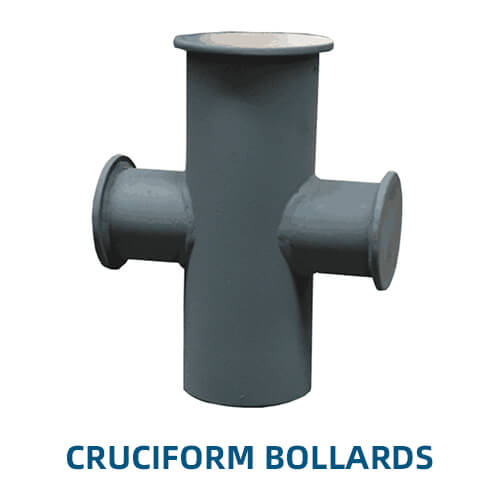
Cruciform bollards feature heavy-duty cast steel or ductile iron construction with a cross-shaped design engineered for efficient rope securing and load distribution. Manufacturers use reinforced structural profiles, corrosion-resistant coatings, and precision casting techniques to ensure long-term reliability in harsh marine environments.
Types
Cruciform bollards are available in single cruciform bollards, double cruciform bollards, base plate mounted bollards, embedded bollards, and customized high-capacity mooring bollard systems. Different load capacities and mounting configurations support diverse marine and offshore applications.
Applications
Marine cruciform bollards are widely used in ports, jetties, offshore terminals, shipyards, cargo berths, oil and gas terminals, and marine infrastructure projects. They provide secure mooring points for vessels, barges, tugboats, tankers, and offshore support vessels during docking operations.
Performance and Benefits
These cruciform bollards provide high mooring strength, efficient rope holding capability, and excellent load distribution during marine mooring operations. Their cross-arm design minimizes rope slippage while improving operational safety and supporting heavy vessel securing requirements.
Maintenance and Care
Regular inspection of surface coatings, structural integrity, mounting bolts, and weld areas helps maintain safe operational performance. Scheduled corrosion protection, repainting, and preventive maintenance reduce wear and extend bollard service life in offshore environments.
Safety Considerations
Cruciform bollards must operate within certified mooring load capacities and approved docking procedures. Operators should inspect bollard integrity, foundation stability, and rope positioning regularly to prevent overloading, structural damage, and unsafe mooring conditions during vessel operations.
Advantages of Cruciform Bollards
- High-strength mooring solution for marine and offshore operations
- Cross-arm design improves rope securing and load distribution
- Heavy-duty construction for ports and marine infrastructure
- Suitable for vessels, barges, and offshore platforms
- Corrosion-resistant marine-grade materials for long service life
- Reliable performance under high mooring loads
- Improves docking safety and operational efficiency
- Supports wire ropes and synthetic mooring lines
- Durable structural design for continuous marine operations
- Low maintenance with excellent operational reliability
Considerations for Cruciform Bollards
- Select bollard capacity based on vessel size and mooring load requirements
- Ensure compatibility with port infrastructure and berth design
- Verify compliance with marine mooring and offshore safety standards
- Conduct regular inspection of structural integrity and mounting systems
- Maintain proper corrosion protection and repainting schedules
- Monitor mooring line angles and operational load distribution
- Choose corrosion-resistant materials for offshore environments
- Ensure secure installation with proper foundation reinforcement
- Replace damaged or structurally compromised bollards immediately
- Select class-approved cruciform bollards certified for marine applications