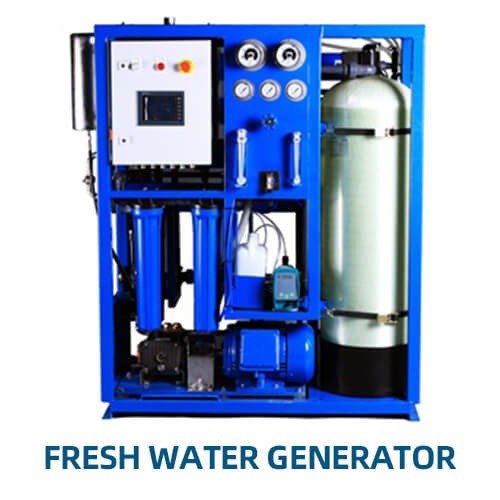
Key Features of Fresh Water Generator
Design and Construction
Fresh water generators feature corrosion-resistant evaporators, condensers, vacuum systems, heat exchangers, and marine-grade stainless steel construction engineered for seawater desalination. Manufacturers design these systems for efficient thermal transfer, reliable operation, and long-term durability in harsh marine and offshore environments.
Types
Fresh water generators are available in vacuum distillation systems, reverse osmosis freshwater generators, plate-type evaporators, shell and tube desalination systems, and waste heat recovery freshwater generation units. Different capacities support commercial vessels, offshore platforms, and marine accommodation facilities.
Applications
Marine fresh water generators are widely used on cargo ships, cruise vessels, offshore rigs, fishing vessels, naval ships, ferries, and offshore accommodation units. They provide potable water for crew consumption, cooking, sanitation, HVAC systems, laundry operations, and onboard utility requirements.
Performance and Benefits
These freshwater generators provide efficient seawater desalination with low energy consumption and stable freshwater production capacity. Advanced heat recovery systems improve operational efficiency while reducing water storage dependency and supporting continuous offshore and long-voyage operations.
Maintenance and Care
Regular inspection of evaporators, condensers, pumps, filters, salinity sensors, and vacuum systems helps maintain freshwater production efficiency and operational reliability. Periodic cleaning, descaling, and preventive maintenance reduce fouling and extend equipment service life.
Safety Considerations
Proper monitoring of salinity levels, operating pressure, vacuum conditions, and water quality is essential for safe freshwater production. Operators should follow approved maintenance procedures and ensure regular inspection of system components to prevent contamination and operational failures.
Advantages of Fresh Water Generator
- Reliable onboard freshwater production solution
- Reduces dependency on shore water supply and storage
- Efficient seawater desalination for marine operations
- Suitable for ships, offshore platforms, and marine facilities
- Durable corrosion-resistant marine-grade construction
- Supports continuous offshore and long-voyage operations
- Low energy consumption with efficient thermal transfer
- Provides potable water for crew and onboard systems
- Reduces operational logistics and freshwater transportation costs
- Long service life with proper maintenance and operation
Considerations for Fresh Water Generator
- Select freshwater production capacity based on vessel requirements
- Ensure compatibility with onboard cooling and seawater systems
- Verify compliance with marine water quality and safety regulations
- Conduct regular inspection of evaporators, pumps, and salinity sensors
- Maintain scheduled cleaning and descaling procedures
- Monitor water quality and salinity levels continuously
- Ensure proper vacuum system and heat exchanger operation
- Choose corrosion-resistant materials for seawater environments
- Maintain preventive maintenance and spare parts availability
- Select class-approved freshwater generators certified for marine applications