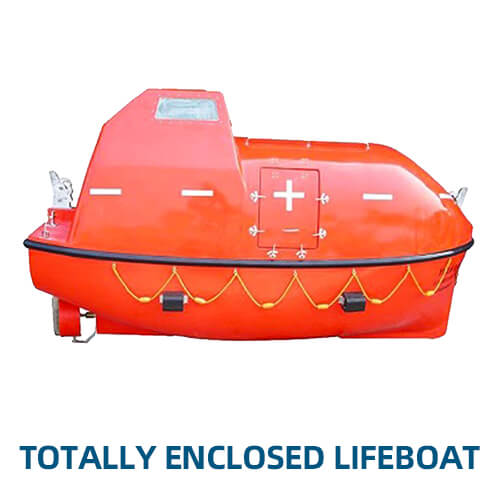
Key Features of Totally Enclosed Lifeboat
Design and Construction
Totally enclosed lifeboats feature reinforced fire-retardant fiberglass construction with fully enclosed weatherproof cabins engineered for maximum crew protection. Manufacturers design these lifeboats with self-righting capability, impact-resistant hulls, shock-absorbing seating, and corrosion-resistant marine components for reliable offshore emergency evacuation.
Types
Totally enclosed lifeboats are available in tanker lifeboats, free fall enclosed lifeboats, davit-launched enclosed lifeboats, self-righting rescue lifeboats, offshore evacuation lifeboats, and customized marine lifesaving systems. Different seating capacities and launching arrangements support varying marine safety requirements.
Applications
Marine totally enclosed lifeboats are widely used on cargo ships, oil tankers, offshore platforms, FPSOs, drilling rigs, passenger vessels, and marine installations. They provide protected emergency evacuation for crew members during fire, explosion, flooding, and severe offshore emergency situations.
Performance and Benefits
These totally enclosed lifeboats provide enhanced weather protection, fire resistance, stable seaworthiness, and reliable emergency survival capability during offshore operations. Enclosed cabin designs improve occupant safety while supporting rapid evacuation and long-duration survival in harsh marine conditions.
Maintenance and Care
Regular inspection of hull structures, release systems, engines, seat belts, ventilation systems, communication equipment, and safety accessories helps maintain operational readiness. Scheduled servicing, launching drills, and preventive maintenance ensure reliable emergency performance and SOLAS compliance.
Safety Considerations
Totally enclosed lifeboats must comply with SOLAS, IMO, and marine lifesaving equipment regulations. Operators should conduct routine launching drills, release mechanism testing, emergency equipment inspection, and flotation checks to ensure safe evacuation performance during marine emergencies.
Advantages of Totally Enclosed Lifeboat
- Maximum crew protection during offshore emergency evacuation
- SOLAS and IMO compliant marine lifesaving equipment
- Fully enclosed weatherproof and fire-retardant construction
- Self-righting capability for improved survival safety
- Suitable for ships, offshore platforms, and tankers
- Reliable performance under severe offshore conditions
- Enhanced occupant protection against fire, smoke, and seawater exposure
- Durable corrosion-resistant marine-grade construction
- Supports safe evacuation and extended survival operations
- Long operational lifespan with proper maintenance and inspection
Considerations for Totally Enclosed Lifeboat
- Verify compliance with SOLAS and IMO safety regulations
- Select lifeboat capacity based on vessel crew requirements
- Conduct regular inspection of hull structures and emergency equipment
- Maintain scheduled launching drills and preventive maintenance programs
- Ensure proper engine servicing and ventilation system maintenance
- Monitor flotation capability, release systems, and communication equipment regularly
- Train crew members in enclosed lifeboat evacuation procedures
- Replace damaged or expired safety equipment immediately
- Ensure certification and periodic testing of launching systems
- Select class-approved totally enclosed lifeboats certified for marine applications