
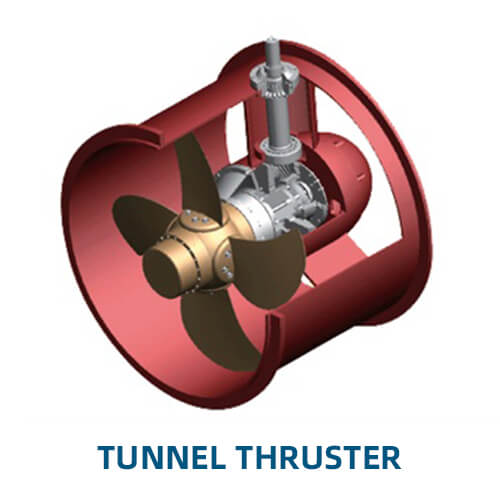
Key Features of Tunnel Thruster
Design and Construction
Tunnel thrusters feature robust tunnel housings, high-efficiency propellers, heavy-duty electric or hydraulic drive systems, and corrosion-resistant marine-grade materials engineered for continuous offshore operation. Manufacturers design these systems for smooth thrust generation, reduced vibration, and long-term durability in harsh marine environments.
Types
Tunnel thrusters are available in bow thrusters, stern thrusters, electric tunnel thrusters, hydraulic tunnel thrusters, fixed pitch thrusters, controllable pitch thrusters, and customized marine maneuvering systems. Different thrust capacities and configurations support varying vessel operational requirements.
Applications
Marine tunnel thrusters are widely used in cargo ships, ferries, offshore support vessels, tugboats, yachts, naval ships, and passenger vessels. They assist with docking, undocking, low-speed maneuvering, dynamic positioning support, and safe vessel movement in restricted marine environments.
Performance and Benefits
These tunnel thrusters provide powerful lateral thrust, improved maneuverability, reduced turning radius, and enhanced vessel control during port operations. Advanced propulsion technology improves operational precision while reducing docking time and supporting safer vessel handling under challenging marine conditions.
Maintenance and Care
Regular inspection of propellers, tunnel structures, seals, bearings, motors, hydraulic systems, and electrical connections helps maintain reliable operational performance. Scheduled lubrication, underwater cleaning, and preventive maintenance reduce wear and extend thruster service life.
Safety Considerations
Tunnel thrusters must operate within approved power and operational limits during vessel maneuvering activities. Operators should inspect propeller condition, electrical systems, and control mechanisms regularly to prevent mechanical failures, overheating, and unsafe vessel handling situations.
Advantages of Tunnel Thruster
- Improves vessel maneuverability during docking operations
- Provides precise lateral thrust for safe vessel control
- Durable marine-grade construction for offshore environments
- Suitable for ships, ferries, and offshore support vessels
- Reduces vessel turning radius and docking time
- Supports safer navigation in restricted waterways and ports
- Available in electric and hydraulic drive configurations
- Reliable performance under continuous marine operation
- Enhances operational efficiency and vessel handling accuracy
- Low maintenance with dependable propulsion support performance
Considerations for Tunnel Thruster
- Select thruster capacity based on vessel size and maneuvering requirements
- Ensure compatibility with vessel hull design and propulsion systems
- Verify compliance with marine propulsion and classification standards
- Conduct regular inspection of propellers, seals, and tunnel structures
- Maintain proper lubrication and preventive maintenance schedules
- Monitor electrical or hydraulic system performance continuously
- Choose corrosion-resistant materials for offshore environments
- Ensure proper installation and tunnel alignment onboard
- Replace damaged propeller blades or worn components immediately
- Select class-approved tunnel thrusters certified for marine applications


