Key Features of Marine Propellers
Design and Construction
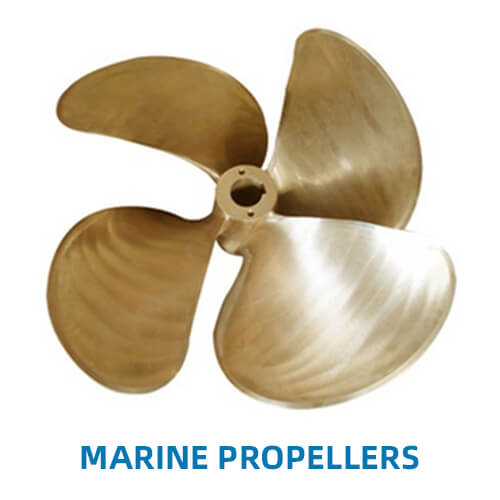
Marine propellers feature precision-cast bronze, stainless steel, nickel aluminum bronze, or alloy construction engineered for high thrust generation and corrosion resistance. Manufacturers design these propellers with optimized blade geometry, balanced structures, and hydrodynamic efficiency to ensure reliable propulsion performance in offshore environments.
Types
Marine propellers are available in fixed pitch propellers, controllable pitch propellers, ducted propellers, skewed blade propellers, folding propellers, high-speed propellers, and customized propulsion systems. Different blade configurations and diameters support varying vessel propulsion requirements.
Applications
Marine propellers are widely used in cargo ships, offshore support vessels, fishing boats, ferries, tugboats, yachts, naval ships, and marine propulsion systems. They provide efficient thrust generation and reliable vessel movement during offshore and marine operations.
Performance and Benefits
These marine propellers provide efficient thrust generation, smooth vessel acceleration, improved fuel efficiency, and reliable maneuverability during marine operations. Advanced hydrodynamic blade designs reduce vibration, cavitation, and operational noise while improving propulsion performance.
Maintenance and Care
Regular inspection of propeller blades, hubs, shaft connections, and surface conditions helps maintain propulsion efficiency and operational reliability. Scheduled underwater cleaning, balancing checks, corrosion monitoring, and preventive maintenance reduce wear and extend propeller service life.
Safety Considerations
Marine propellers must operate within approved RPM and propulsion load limits during vessel operation. Operators should inspect blade damage, cavitation wear, shaft alignment, and fastening systems regularly to prevent propulsion failures and unsafe vessel performance during offshore activities.
Advantages of Marine Propellers
- Efficient thrust generation for reliable marine propulsion
- Improves vessel fuel efficiency and maneuverability
- Durable corrosion-resistant marine-grade construction
- Suitable for ships, ferries, tugboats, and offshore vessels
- Reduces vibration and operational noise levels
- Supports stable vessel acceleration and propulsion performance
- Available in multiple blade configurations and pitch designs
- Reliable performance under continuous offshore operation
- Enhances vessel handling and navigation control
- Long operational lifespan with proper maintenance
Considerations for Marine Propellers
- Select propeller size and pitch based on vessel propulsion requirements
- Ensure compatibility with engine power and shaft systems
- Verify compliance with marine propulsion and classification standards
- Conduct regular inspection of blades, hubs, and shaft connections
- Maintain proper underwater cleaning and corrosion protection schedules
- Monitor cavitation, vibration, and propulsion efficiency continuously
- Choose corrosion-resistant materials for offshore environments
- Ensure proper propeller balancing and shaft alignment onboard
- Replace damaged or worn propeller blades immediately
- Select class-approved marine propellers certified for marine applications